Source plastic cosmetic jar for Tea, Food, and Chemical Uses
Find 30 verified listings for plastic cosmetic jar options suitable for tea, food, and chemical packaging. Buyers can compare certifications like ISO and CIQ, MOQs ranging from 10 to 30,000 pieces, and lead times between 10 to 25 days from suppliers in China.
Key considerations
Products List


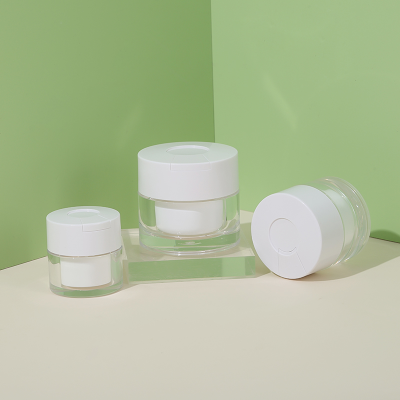


Comprehensive Sourcing Guide
Strategic Sourcing Guide for Plastic Cosmetic Jars
The global market for plastic cosmetic jars is characterized by a diverse range of materials, capacities, and compliance requirements. Buyers entering this sector must navigate a landscape where product attributes vary significantly between suppliers. The core keyword "plastic cosmetic jar" encompasses items ranging from small 3g mini jars to larger 380ml containers, each serving distinct packaging needs for cosmetics, food, and chemical products. This guide provides a structured approach to sourcing these items, focusing on verified technical specifications, certification standards, and operational logistics derived from current market data.
Technical Specifications and Material Composition
Understanding the physical and chemical properties of the plastic jar is the first step in any procurement strategy. The primary material observed in the current market is plastic, specifically Polypropylene (PP), which is frequently cited as the material for cosmetic cream jars. PP is favored for its chemical resistance and durability, making it suitable for a wide array of applications including tea, food, aerosols, and various chemicals.
Capacity and dimensions are critical variables that define the utility of the jar. Market data indicates a broad spectrum of sizes, with specific models available in 3g, 5ml, 10ml, 15ml, 20ml, 50ml, and up to 380ml capacities. For instance, specific product models are designated for 3g mini cosmetic cream jars, while others are engineered for 50-gram or 50ml applications. The physical dimensions are equally important; some specifications list precise measurements such as 29mm x 17mm for 3g units, while others provide detailed capacity and size data like 41mm x 17.5mm for 5ml jars or 36.8mm x 19.5mm for similar small-volume containers.
The sealing mechanism is another technical differentiator. The Screw Cap is a common sealing type identified in the supply chain, ensuring a tight closure that prevents leakage and maintains product integrity. This is particularly vital for aerosol and chemical applications where containment is a safety priority. Furthermore, the product models vary significantly, with identifiers such as OPPP1202, WL-PJ009, PT-1141, and PC-135 representing different design iterations. Buyers must verify that the specific model number aligns with their required capacity and dimensional constraints before placing an order.
Compliance and Certification Standards
In the B2B cosmetics and packaging sector, compliance is non-negotiable. The supply chain for plastic cosmetic jars demonstrates a strong emphasis on international and regional certifications. The most frequently observed certifications include CIQ (China Inspection and Quarantine), ISO, and CE. Some listings indicate a combination of these standards, such as "ISO, CE, CIQ," suggesting a robust compliance framework for manufacturers.
Beyond general certifications, specific product standards are often referenced. These include SGS, UL, and custom compliance standards. For example, certain jars are marked with "ce SGS ul" or "ce SGS ul Customized," indicating that the product meets specific safety and quality benchmarks. It is crucial for buyers to understand that while these certifications are listed, they represent the supplier's claimed adherence to standards rather than a universal guarantee for every unit in a batch.
When evaluating a supplier, procurement teams should request valid certification documents that correspond to the specific product model. The presence of CIQ is particularly relevant for exports from China, as it validates the inspection and quarantine status of the goods. Similarly, ISO certification indicates adherence to quality management systems, while CE marking suggests compliance with European health, safety, and environmental protection standards. Buyers must verify that the certification applies to the specific plastic material and manufacturing process used for the cosmetic jar, rather than accepting generic claims.
Cost Drivers and Pricing Dynamics
The pricing structure for plastic cosmetic jars is influenced by several factors, including material costs, customization levels, and order volume. The observed market data reveals a significant disparity in Minimum Order Quantities (MOQ), ranging from as low as 10 units to as high as 30,000 units. This wide range suggests that pricing is highly volume-dependent. Suppliers with high daily capacities, such as those reporting 50,000 pieces per day, may offer more competitive unit prices for large orders, whereas smaller MOQs might carry a premium due to setup costs.
Customization is a major cost driver. The market data explicitly notes that "Customization" and "Customized" options are available. This implies that buyers can request specific colors, logos, or dimensional adjustments. However, customized orders often require higher MOQs and longer lead times. For instance, while some standard models may have an MOQ of 10,000 pieces, fully customized runs might require 30,000 pieces or more.
Lead times also impact the overall cost of procurement. The observed lead times vary between 10-20 days and 20-25 days. Longer lead times can be associated with complex customization or high demand periods, potentially affecting inventory planning and cash flow. Additionally, the origin of the product, primarily China with specific hubs in Ningbo and Yuyao, influences logistics costs. Buyers should factor in shipping expenses and potential tariffs when calculating the total landed cost of the plastic cosmetic jars.
Typical Applications and Usage Scenarios
Plastic cosmetic jars are versatile packaging solutions designed for a variety of industries. The usage data highlights applications in the food, tea, aerosol, and chemical sectors. For the cosmetics industry, these jars are specifically utilized for cream products, as indicated by terms like "PP Cosmetic Cream Jar" and "Cosmetic Jar." The capacity range supports both personal care items, such as face creams and lotions, and larger bulk packaging needs.
The chemical and aerosol applications demand higher performance standards. Jars used for these purposes must withstand potential chemical reactions and pressure variations. The Screw Cap sealing type is particularly advantageous here, providing a secure barrier against leakage. Furthermore, the "Eco-Friendly" attribute observed in the market suggests that some manufacturers are producing jars with sustainability in mind, which is increasingly important for brands targeting environmentally conscious consumers.
The intended user demographic also plays a role in design. Some specifications mention usage for "Women," indicating that the aesthetic design and size of the jar may be tailored to female consumers. However, the functional requirements for food and chemical storage remain paramount, ensuring that the material does not leach harmful substances into the contents.
Supplier Evaluation and Operational Capacity
Selecting the right supplier requires a thorough evaluation of their operational capabilities and reliability. The market data indicates that suppliers vary significantly in their production capacity and logistical support. A key metric is the daily production capacity, with some suppliers reporting a capacity of 50,000 pieces per day. This high capacity suggests the ability to handle large-scale orders and meet tight deadlines.
Packaging standards are another critical evaluation point. Suppliers utilize various packaging methods, including "Box," "Export Cartons," "Safe Export Pack," and "Cardboard Box." The choice of packaging affects the safety of the goods during transit. "Layer Packed in Carton" and "Safe Export Pack" imply a higher level of protection against damage, which is essential for fragile plastic jars.
Sample availability is a crucial factor in the supplier selection process. The data confirms that "Samples" are available and often provided for free. This allows buyers to physically inspect the quality, material thickness, and sealing integrity before committing to a large order. Buyers should utilize these samples to verify that the product meets their specific technical and aesthetic requirements.
Quality Control and Inspection Protocols
Ensuring consistent quality is paramount when sourcing plastic cosmetic jars. The presence of certifications like SGS and CIQ indicates that suppliers have established quality control protocols. However, buyers should not rely solely on these labels. Instead, they should implement their own inspection regimes or hire third-party inspection agencies to verify the quality of the goods upon production and before shipment.
Key quality control checks should include verifying the material composition to ensure it matches the specified plastic type (e.g., PP). Dimensional accuracy is also critical; buyers must measure the jar's height, diameter, and cap fit to ensure compatibility with their filling machinery. The sealing integrity, particularly for aerosol and chemical applications, must be tested to prevent leaks.
The "Customized" nature of many products adds a layer of complexity to quality control. Buyers must ensure that custom colors and logos are applied consistently and do not compromise the structural integrity of the jar. Regular communication with the supplier regarding quality standards and inspection criteria is essential to mitigate risks.
Long-Term Procurement Considerations
Sourcing plastic cosmetic jars is not just a one-time transaction but a long-term partnership. Buyers should consider the scalability of their supplier's operations. With observed lead times ranging from 10 to 25 days, suppliers must demonstrate the ability to maintain these timelines during peak seasons. The ability to scale production up or down based on market demand is a valuable trait for a reliable supplier.
Sustainability is an emerging consideration. The "Eco-Friendly" attribute suggests a trend toward greener packaging. Buyers looking to align with corporate sustainability goals should inquire about the recyclability of the plastic used and the supplier's environmental policies. Additionally, the availability of free samples and the flexibility in MOQs allow for a more agile procurement strategy, enabling buyers to test new designs or adjust to market changes without significant financial risk.
Finally, the geographic location of the supplier, primarily in China with hubs in Ningbo and Yuyao, offers access to a robust supply chain. However, buyers must remain vigilant about geopolitical factors and logistics disruptions that could impact lead times and costs. Establishing a clear communication channel and a detailed contract that outlines quality standards, delivery schedules, and dispute resolution mechanisms will help secure a stable supply of plastic cosmetic jars for the long term.
FAQs
What certifications are available for plastic cosmetic jars?
Available certifications include CIQ, ISO, CE, and SGS. Some listings combine these standards, such as ISO, CE, and CIQ, to ensure compliance for export and safety requirements in various markets.
Which specifications are offered for different jar sizes?
Specifications vary by model, offering sizes like 3g, 5ml, 10ml, 15ml, 20ml, 50ml, and 380ml. Dimensions are specific, such as 29mm x 17mm for 3g units or 41mm x 17.5mm for 5ml jars.
Can buyers request customization for plastic cosmetic jars?
Yes, customization is available for colors, logos, and dimensions. Customized orders often require higher minimum order quantities, such as 30,000 pieces, compared to standard runs.
What is the typical lead time for production?
Lead times range from 10 to 20 days or 20 to 25 days depending on the order. Complex customization or high demand periods may extend the delivery schedule within these observed ranges.
How much is the minimum order quantity for these jars?
Minimum order quantities vary significantly from 10 to 30,000 pieces. Specific listings show MOQs of 10,000 or 30,000 pieces, heavily influencing the unit pricing structure.
Where are the plastic cosmetic jars manufactured?
Products originate primarily from China, with specific manufacturing hubs in Ningbo and Yuyao. This location influences logistics costs and shipping times for international buyers.